 Foshan AMJ Windows and Doors Co., Ltd.
 Aluminum sliding doors are widely used in modern homes because they provide large glass views without requiring an inward or outward swing area. For kitchens, living rooms and patios, the right sliding door can improve natural light, ventilation and the connection between indoor and outdoor spaces.
However, each room has different requirements. Kitchen sliding doors should be practical and easy to clean, living room sliding doors often need larger glass panels, while aluminum patio doors should balance weather resistance, security and smooth daily operation.
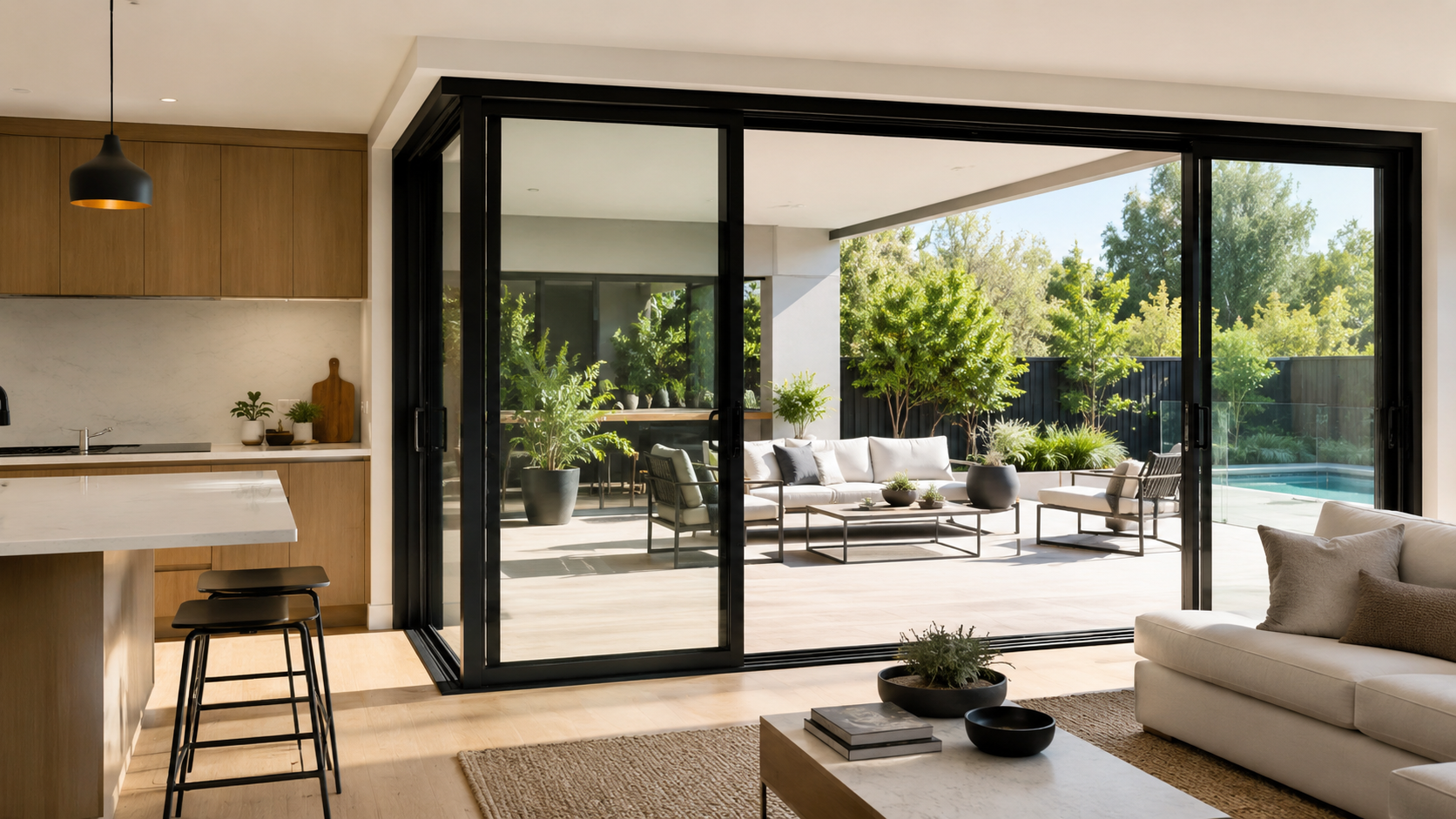
Quick Guide: Which Sliding Door Fits Each Space?
| Home Area | Recommended Configuration | Main Priority | Useful Options |
|---|---|---|---|
| Kitchen | Two-panel or three-panel aluminum sliding door | Easy access, ventilation and simple cleaning | Low-E glass, screen and low-maintenance finish |
| Living Room | Large two-panel, four-panel or multi-track sliding door | Natural light, wide views and larger openings | Slim frames, insulated glass and custom colors |
| Patio | Heavy-duty patio sliding door or multi-panel system | Weather resistance, security and indoor-outdoor access | Tempered glass, multi-point locks and insect screens |
Aluminum sliding doors are practical for kitchens that open onto a deck, courtyard or outdoor dining area. Because the panels move along a track, the door does not take up valuable floor space beside cabinets, tables or kitchen islands.
For a smaller kitchen opening, a two-panel sliding glass door is usually enough. Wider openings can use three-panel or multi-track systems to provide more access and ventilation.
What to Consider for Kitchen Sliding Doors
- Choose a smooth surface finish that is easy to clean.
- Consider an insect screen for ventilation during cooking.
- Use tempered safety glass where required.
- Select Low-E or insulated glass if the kitchen receives strong sunlight.
- Confirm that the handle and locking system are easy to operate.
Black, white and gray aluminum frames can match most contemporary kitchens. Custom aluminum sliding doors can also be produced to match the color of nearby windows and exterior doors.
Living rooms usually benefit from larger glass areas. Wide aluminum sliding doors can bring more daylight into the home and create a clearer view of the garden, balcony or pool area.
For a standard residential opening, a two-panel system may be suitable. Large living rooms can use four-panel, three-track or multi-panel sliding doors to create a wider opening and a stronger indoor-outdoor connection.
What to Consider for Living Room Sliding Doors
- Use larger glass panels to improve views and natural light.
- Select slim aluminum frames for a cleaner appearance.
- Consider insulated or Low-E glass for better indoor comfort.
- Choose laminated glass when additional sound control is needed.
- Confirm the track and roller capacity for large or heavy panels.
Thermal break aluminum sliding doors may be more suitable for homes in areas with very hot summers or cold winters. The frame, glass and sealing system should be considered together rather than selecting the door only by appearance.
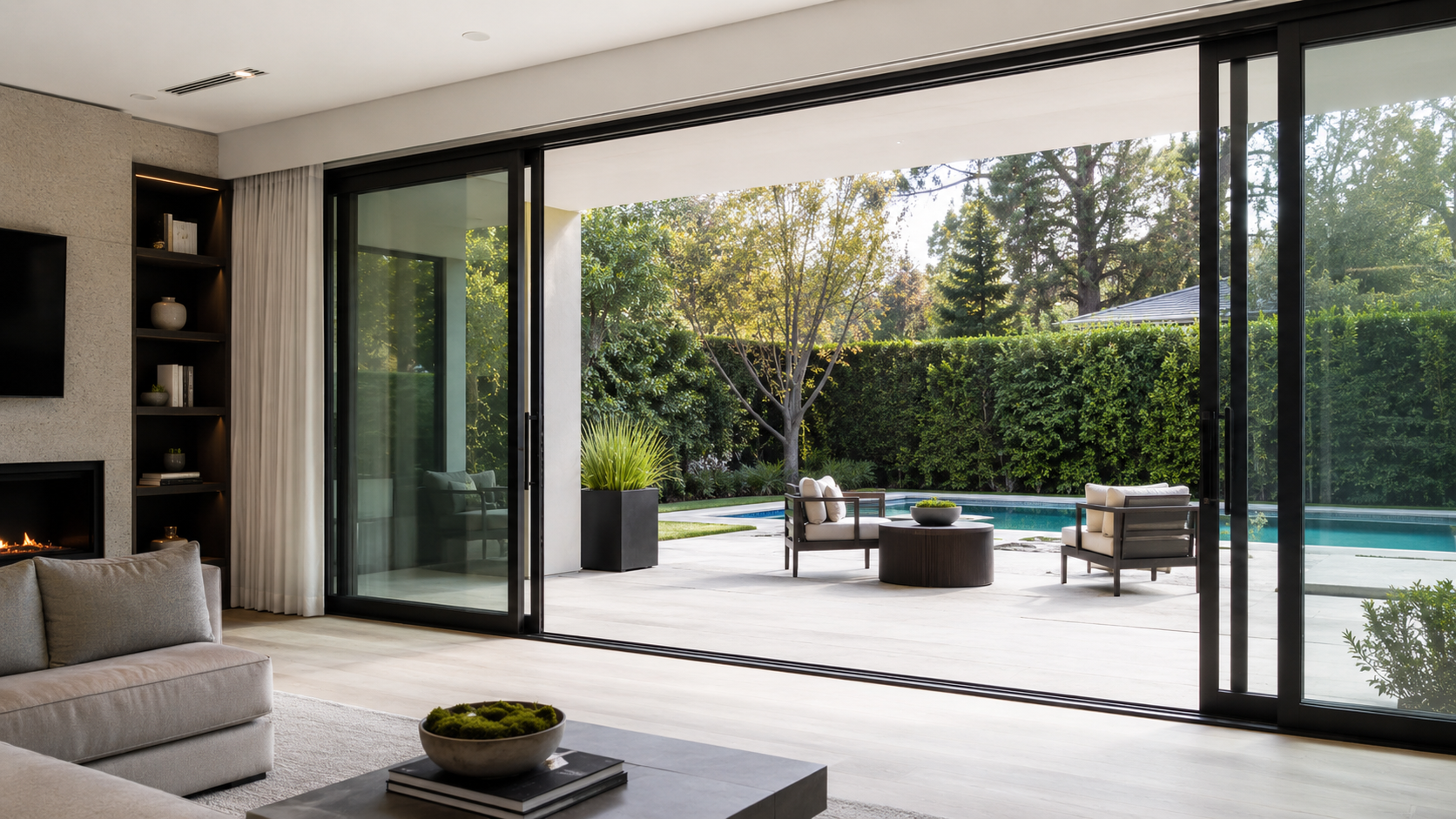
Aluminum patio doors are exposed to wind, rain, sunlight and frequent daily use. A patio sliding door therefore needs a stable frame, suitable drainage, reliable locks and durable rollers.
For patios, gardens and pool areas, wider sliding door systems can create a more open transition between the house and outdoor space. Multi-panel or multi-track configurations are useful when the project requires a larger clear opening.
What to Consider for Aluminum Patio Doors
- Check water resistance, air tightness and drainage design.
- Select corrosion-resistant finishes for coastal homes.
- Use tempered or laminated safety glass around patios and pools.
- Consider multi-point locks for improved security.
- Add a sliding or pleated screen where insect protection is needed.
- Choose a sill and installation detail suitable for the project.
Patio aluminum sliding doors should also be selected according to the opening size and panel weight. Larger panels need stronger tracks, rollers and frame connections to maintain smooth operation.
Two-Panel, Four-Panel or Multi-Track?
The opening configuration affects both appearance and daily use. A two-panel aluminum sliding door is simple and suitable for standard kitchen or patio openings. A four-panel system can provide a more balanced appearance across a wider wall.
Three-track and multi-track sliding doors allow more panels to move or stack, creating a larger clear opening. These systems are often selected for living rooms, villas and custom homes with wide outdoor views.
| Configuration | Suitable For | Main Benefit |
|---|---|---|
| Two-Panel | Kitchens, bedrooms and standard patios | Simple operation and practical cost |
| Four-Panel | Living rooms and wide residential openings | Balanced appearance and larger glass area |
| Multi-Track | Villas, pool areas and large patios | Wider clear opening and flexible panel movement |
Glass Options for Residential Sliding Doors
Glass selection can affect safety, indoor temperature, sound control and privacy. Tempered glass is commonly used for residential aluminum doors, while laminated glass can improve safety and reduce outside noise.
Low-E insulated glass helps reduce heat transfer and is useful for large living room or patio doors. Tinted, frosted or reflective glass may also be selected according to privacy and design requirements.
Frame Color and Surface Finish
Black aluminum sliding doors are widely used in modern homes because they create a strong contrast with light-colored walls. White and gray frames provide a softer appearance, while custom colors can be matched to the exterior façade or interior design.
Powder coating, anodizing and other surface finishes should be selected according to the project environment. For coastal homes, corrosion resistance should be considered together with hardware and fastener materials.
What to Confirm Before Ordering
- Exact opening width and height
- Number of panels and track configuration
- Sliding direction and fixed panel position
- Frame color and surface finish
- Tempered, laminated, Low-E or insulated glass
- Hardware, locks and roller capacity
- Insect screen and installation options
- Water resistance and wind pressure requirements
Which Aluminum Sliding Door Is Best?
For kitchens, a compact two-panel sliding door with an insect screen is often the most practical option. Living rooms usually benefit from larger glass panels, slim frames and insulated glass. Patios need stronger aluminum door systems with reliable drainage, locks and weather resistance.
Many residential projects use more than one configuration. A home may use a two-panel kitchen sliding door, a four-panel living room system and a multi-track aluminum patio door facing the garden or pool.
AMJ Custom Aluminum Sliding Doors
AMJ manufactures custom aluminum sliding doors for homes, villas, apartments and residential building projects. Door size, frame color, glass, hardware, screens, track configuration and installation options can be customized according to project requirements.
Builders, contractors, developers and distributors can provide drawings, opening sizes, a window schedule or BOQ for factory-direct aluminum window and door supply.
Need Aluminum Sliding Doors for a Residential Project?
Send your drawings, opening sizes or window schedule. AMJ can help prepare a custom aluminum sliding door proposal for kitchens, living rooms, patios and other residential spaces.
Get a Project Quote →