 Foshan AMJ Windows and Doors Co., Ltd.
Casement windows are side-hinged operable windows that open outward. Their compression-style closing action can provide a tight perimeter seal, while the full-opening sash gives good ventilation and a relatively clear glass area. For project work, however, the frame and hardware behind that simple operation matter just as much as the window style.
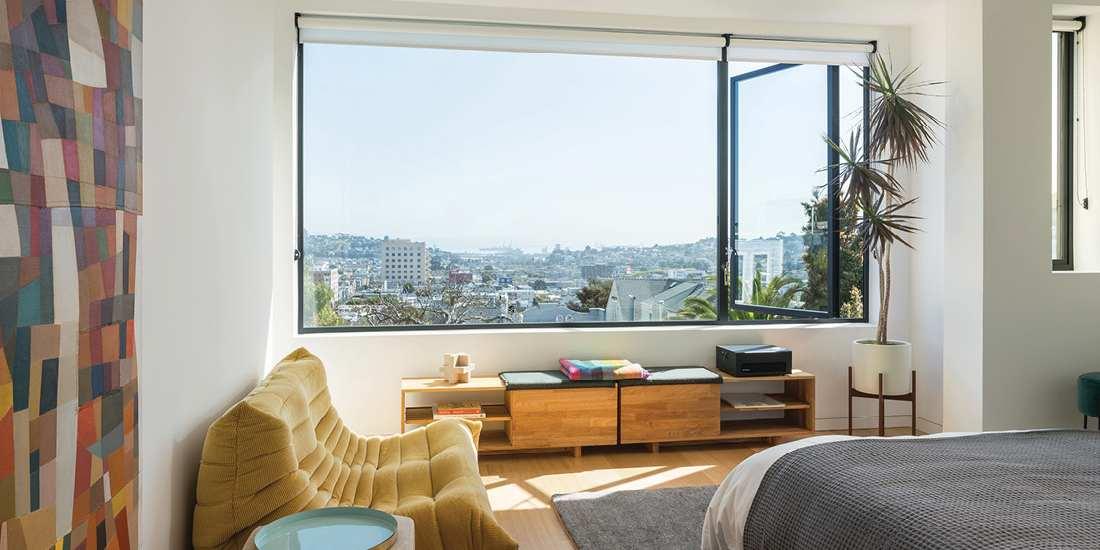
What Should You Compare When Choosing the Best Casement Windows?
Aluminum is strong and well suited to larger openings, but the frame needs an effective thermal break when energy performance matters. Compare the frame depth, insulation-strip width and the complete tested configuration rather than looking only at the visible profile.
Glass selection affects thermal performance, weight, acoustics and the allowable sash size. Current AMJ casement configurations support insulated Low-E glazing, with selected systems accepting double or triple glazing and insulated-glass thicknesses up to 47 mm.
The hardware needs to match the sash width, height and glass weight. On current AMJ casement configurations, sash load options extend from 40 kg to 100 kg depending on the size range. A large sash should never be approved from width and height alone without checking weight and hardware capacity.
For construction projects, ask for the performance of the exact window configuration being quoted. One higher-insulation AMJ casement configuration lists 220 Pa water performance, 0.05 L/s·m² air leakage, wind-pressure performance up to 2160 Pa, 37 dB sound insulation and CW-PG30.
Casement windows also need to work with the wall and room. Current AMJ options include Nail Fin or mounting-tab installation and accordion screens on selected outward-opening configurations.
AMJ Casement Window Options: What Changes Between Configurations?
| Project Decision | Standard Thermal-Break Option | Higher-Insulation Option |
|---|---|---|
| Profile thickness | 1.8 mm | 1.8 mm |
| Thermal-break width | 24 mm | 35.3 mm |
| Typical insulated glass | 5 mm Low-E + 15 mm Argon + 5 mm tempered clear glass | 5 mm Low-E + 20 mm Argon + 5 mm tempered clear glass |
| Triple-glazing option | Available on selected configurations | Available on selected configurations |
| Maximum IGU thickness | 39 mm | 47 mm |
| Configurations | Single operable, one operable + fixed, fixed | Single operable, one operable + fixed, fixed |
These are product capabilities, not a substitute for project review. The final window size and glass should be checked together with the required performance and approved shop drawings.
Where Do Casement Windows Work Best?
Bedrooms
Casement windows can provide a large usable opening from a relatively compact frame. Where a bedroom window is intended to serve as an emergency escape and rescue opening, the actual net clear opening must be checked against the adopted local code.
Kitchens
A casement window can work well around a counter because the sash opens outward and the room-side space stays clear. Handle location still needs to be coordinated with the counter, faucet, blinds and screen.
Living Rooms
Use a fixed-and-operable combination when the main goal is a broad view but only part of the opening needs ventilation.
Townhouse and Multifamily Projects
Repeated window types benefit from a consistent frame, glass and hardware specification. That simplifies the window schedule, shop drawings, production and installation sequence. See an AMJ multi-family residential window project for a project application example.
What Is the Main Drawback of a Casement Window?
The main limitation is the outward-swinging sash. It needs exterior clearance and can conflict with narrow walkways, railings or landscaping. Large sashes also place more load on hinges and locking hardware than a fixed window.
What Is the Best Material for Casement Windows?
There is no single frame material that is best for every project. For AMJ projects, the focus is thermally broken aluminum because it combines structural strength, slim profiles, custom sizing and compatibility with insulated glass. The correct choice still depends on climate, opening size and required performance.
For product details, review the high-insulation aluminum casement window or browse the full casement window range.
What Should Builders Send Before Quotation?
- Window schedule or BOQ
- Rough opening or approved frame size
- Opening direction and handing
- Glass requirements
- U-Factor / SHGC or other project performance targets
- Screen requirements
- Frame color and finish
- Wall section and installation method
FAQ
What makes a casement window good for a project?A good casement window matches the opening size, glass weight, hardware capacity, thermal target, screen and installation detail rather than simply offering the most features.
Are double casement windows available?Large openings can be divided into multiple operable or fixed-and-operable sections. The final layout should be shown on the elevation and window schedule.
Is a 24x59 window automatically suitable as a casement window?No. A nominal size alone does not confirm suitability. The supplier still needs to check sash proportions, glass weight and hardware capacity.
Are casement windows suitable for large openings?They can be, but very large openings are often better divided into fixed and operable sections so the operable sash stays within the system limits.
Send your drawings, BOQ or window schedule so the frame, glass, sash size and installation detail can be reviewed together.
View Casement Windows Send Project Requirements