 Foshan AMJ Windows and Doors Co., Ltd.
 The best windows for a home are not always the same in every room. Bedrooms need comfortable ventilation and quiet indoor conditions, bathrooms need privacy and moisture control, while living room windows usually focus more on natural light, outdoor views and architectural appearance.
When choosing residential aluminum windows, homeowners, builders and contractors should consider the room function, opening size, exterior clearance, cleaning access, local climate and glass requirements.
Casement, awning, sliding, double hung and tilt and turn windows can all work well in residential projects, but each window style is better suited to different spaces.
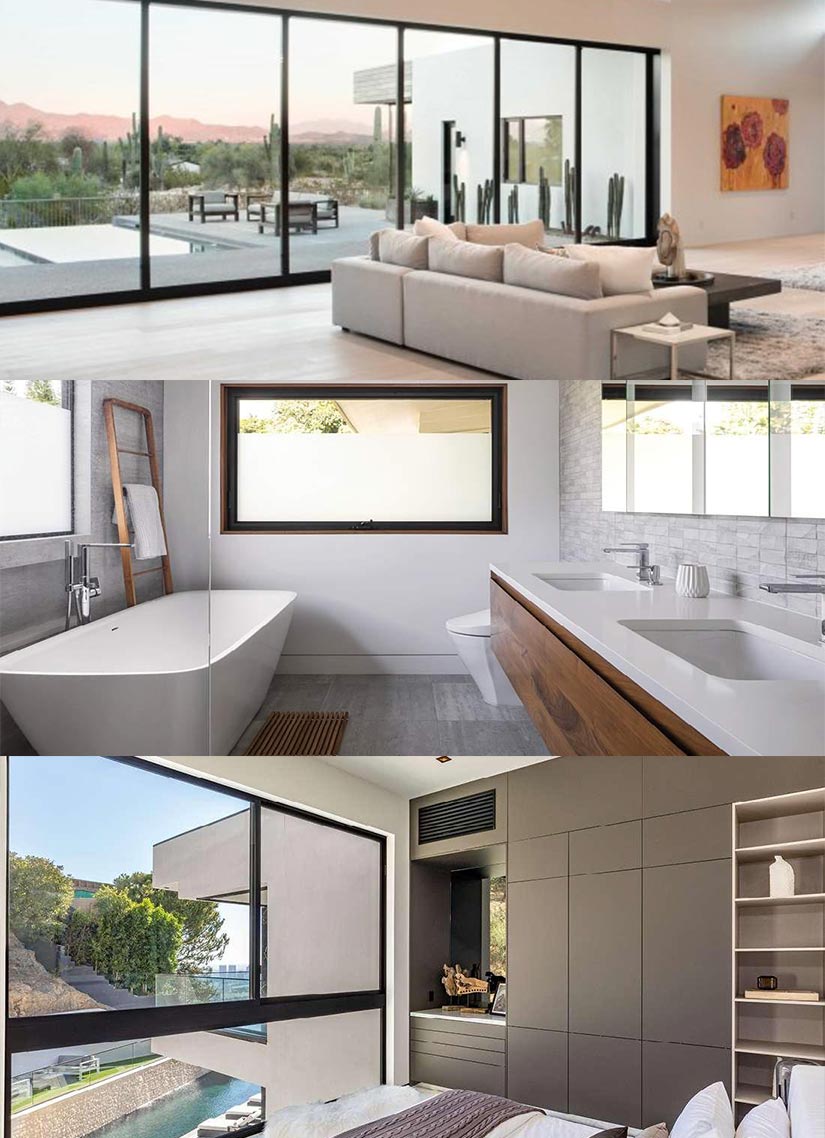
Quick Window Selection by Room
| Room | Recommended Window Styles | Main Priority | Suggested Glass and Options |
|---|---|---|---|
| Bedroom | Casement, double hung or tilt and turn | Ventilation, sound control and comfortable operation | Low-E insulated glass, insect screen and secure locks |
| Bathroom | Awning, tilt and turn or compact casement | Privacy, ventilation and moisture control | Frosted glass, privacy glass and corrosion-resistant hardware |
| Living Room | Sliding, casement, fixed or combination windows | Natural light, outdoor views and larger glass areas | Low-E insulated glass, laminated glass and custom frame colors |
Bedroom windows should provide fresh air without making daily operation difficult. They should also support a comfortable indoor temperature, reduce outside noise and provide secure locking.
Aluminum casement windows are a practical choice for bedrooms because the sash can open widely and provide strong ventilation. When closed, the sash presses against the frame seals, helping support air tightness and weather resistance.
For traditional North American residential designs, double hung windows provide a familiar appearance and flexible upper and lower ventilation without projecting outside the wall.
Tilt and turn windows are another option for bedrooms where secure ventilation, inward opening and easier interior cleaning are important.
- Choose Low-E insulated glass for better indoor comfort.
- Consider laminated glass for bedrooms near roads or busy areas.
- Add an insect screen where windows are opened regularly.
- Check local opening and emergency escape requirements before ordering.
- Select hardware that can be operated easily but locked securely.
Bathroom windows need to balance ventilation and privacy. Moisture from showers and baths should be able to leave the room, but the window should not expose the interior to neighboring properties or outdoor walkways.
An aluminum awning window is often suitable for bathrooms because it can be installed higher on the wall and opened for ventilation while maintaining better privacy.
Compact casement or tilt and turn windows can also work where the opening is easy to reach. A tilt and turn design allows the upper part of the sash to tilt inward for controlled daily ventilation.
- Use frosted, patterned or other privacy glass options.
- Select aluminum frames and hardware suitable for humid conditions.
- Keep the window easy to reach for daily ventilation.
- Consider a retractable or fixed screen where insects are a concern.
- Confirm local safety-glazing requirements for windows near showers or bathtubs.
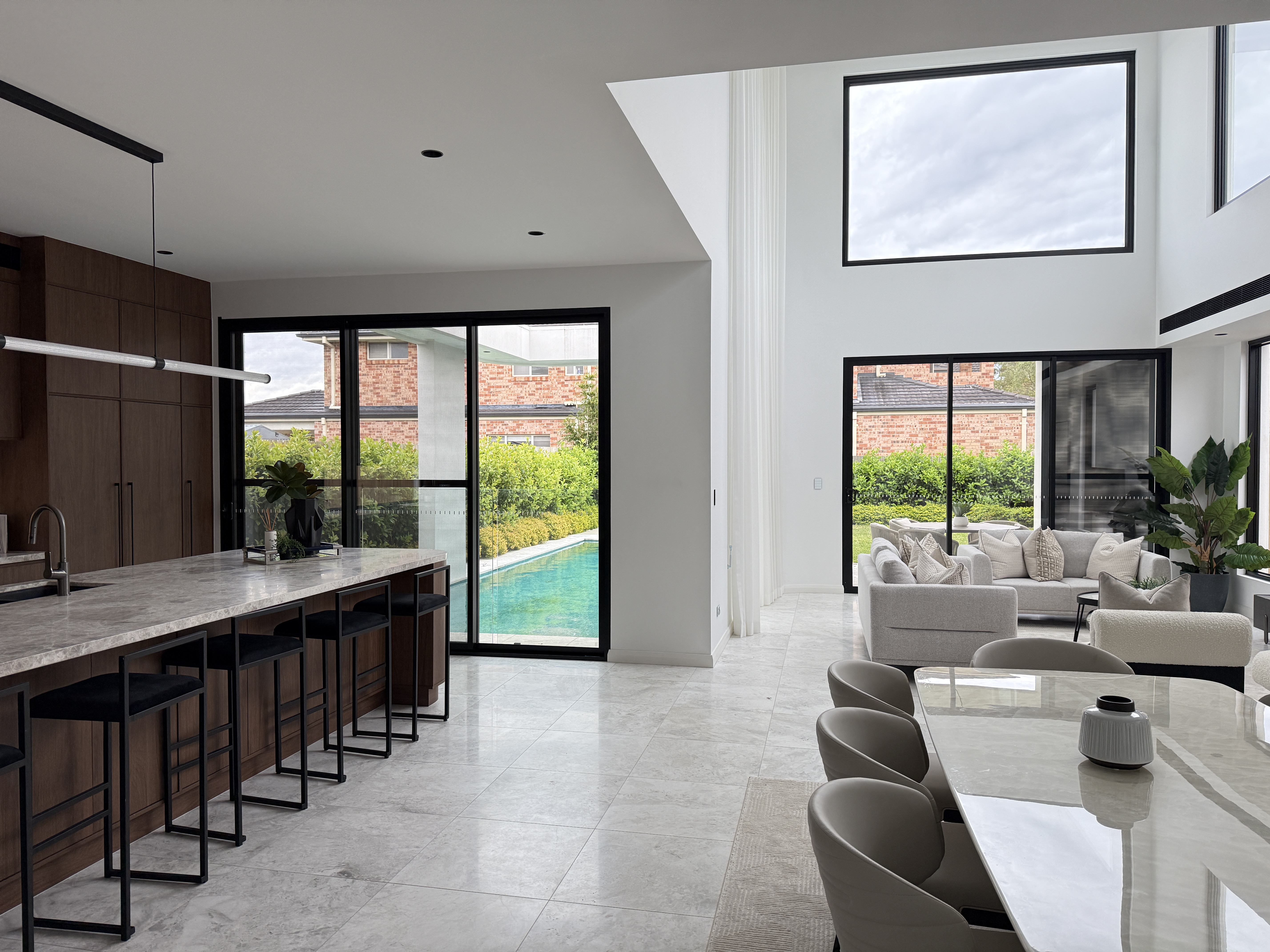
Living room windows usually cover larger wall areas and have a stronger effect on the appearance of the home. The main goals are often natural light, outdoor views and a comfortable connection with the garden, balcony or patio.
Aluminum sliding windows are suitable for wide horizontal openings and do not require inward or outward swing space. They work well beside patios, furniture and walkways.
For a larger glass view, fixed windows can be combined with casement or awning sections. This allows the center glass area to remain clear while smaller operable windows provide ventilation.
Large living room windows should use a suitable aluminum profile, glass configuration and support structure. Low-E insulated glass can help reduce heat transfer, while laminated glass may provide additional sound control and safety.
- Use larger glass panels where daylight and outdoor views are important.
- Select slim but structurally suitable aluminum frames.
- Consider Low-E insulated glass for large sun-facing openings.
- Match the frame color with the interior and exterior design.
- Check how curtains, furniture and screens will work around the window.
Choose the Window by the Main Room Priority
Casement or Awning
Casement windows provide a wide opening, while awning windows are useful for controlled ventilation in smaller or higher wall openings.
Awning with Privacy Glass
A high-position awning window with frosted glass is a practical combination for bathrooms and other private spaces.
Sliding or Fixed Combination
Sliding and fixed aluminum windows provide wider glass areas and are well suited to living rooms facing gardens, patios or balconies.
Glass Selection Is as Important as Window Style
The opening method is only one part of choosing aluminum windows for homes. Glass affects privacy, energy performance, safety, sound control and the amount of daylight entering the room.
| Glass Option | Best Use | Main Benefit |
|---|---|---|
| Low-E Insulated Glass | Bedrooms and living rooms | Helps reduce heat transfer and improve indoor comfort |
| Laminated Glass | Bedrooms near roads and large living room windows | Supports additional safety and sound control |
| Frosted or Privacy Glass | Bathrooms | Allows daylight while reducing direct visibility |
| Tempered Glass | Bathrooms and larger residential openings | Provides safety glazing for suitable applications |
Should Every Room Use the Same Window Style?
Using one frame color and aluminum window system can create a consistent exterior appearance, but every room does not need the same opening method.
A residential project may use casement windows in bedrooms, awning windows with privacy glass in bathrooms, and large sliding or fixed windows in the living room. This approach allows each room to receive the ventilation, privacy and natural light it needs.
What to Confirm Before Ordering Residential Aluminum Windows
- Opening width, height and installation position
- Required ventilation and opening direction
- Exterior clearance around the window
- Privacy, safety and sound-control requirements
- Low-E, insulated, laminated or frosted glass
- Frame color, hardware and insect-screen options
- Cleaning access and daily operating height
- Local building and safety requirements
AMJ Residential Aluminum Window Options
AMJ supplies custom aluminum casement, sliding, awning, double hung and tilt and turn windows for homes, villas, apartments and residential building projects.
Sizes, frame colors, glass, hardware, screens, opening configurations and installation options can be customized according to drawings and window schedules. Explore more custom aluminum window systems for residential and project applications.
Need Aluminum Windows for a Residential Project?
Send your drawings, window schedule or opening sizes. AMJ can help match suitable window styles for bedrooms, bathrooms, living rooms and other residential spaces.