 Foshan AMJ Windows and Doors Co., Ltd.
 Most problems blamed on the hardware start earlier: an uneven sill, a twisted frame, missing support at the head, or panels installed in the wrong sequence. That is why bifolding doors installation should follow the approved project drawings rather than a generic closet-door tutorial.
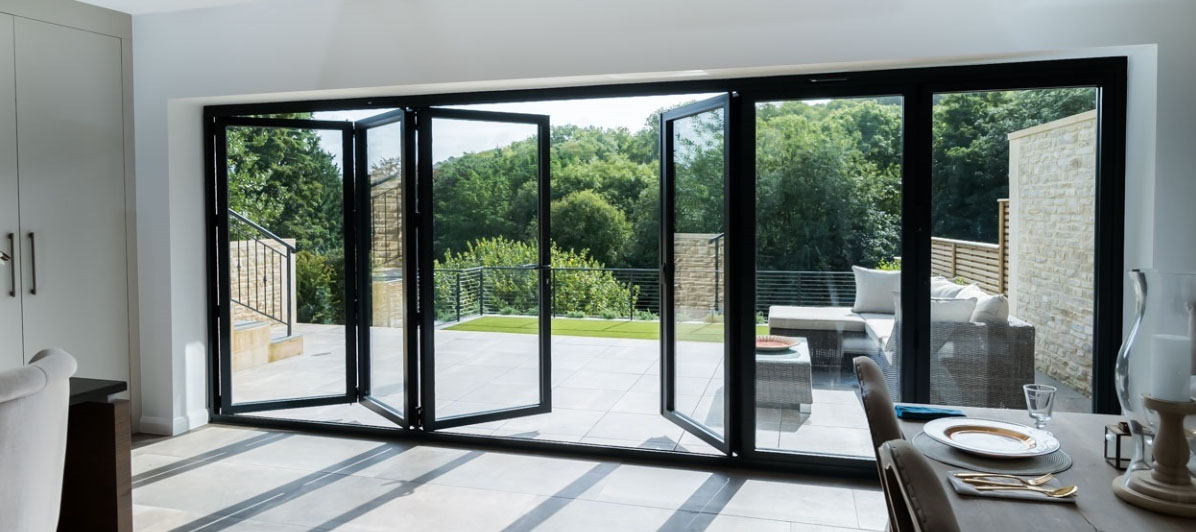
Before Installing Bifold Doors
- Match the opening to the approved door mark and panel configuration.
- Check width, height and both diagonals.
- Verify the finished floor and threshold condition.
- Confirm whether panels stack left, right or split to both sides.
- Confirm structural support at the head where required by the selected system.
- Lay out panels and hardware in installation order before lifting them into place.
- Review the wall flashing and perimeter sealant detail.
Many large exterior aluminum folding systems use a sill or bottom track as part of the frame and water-management design. The exact load path and track arrangement are system-specific, so the project installation drawing should control.
A Practical Installation Sequence
Install the sill, jambs and head in the correct sequence for the system. Keep the sill fully supported and check the frame before final tightening.
Large folding doors are sensitive to frame movement. Small errors can show up later as uneven panel gaps or difficult locking.
Use the hardware positions shown on the installation drawing. Do not swap carriers or pivot points between panels because they may look similar.
Start with the panel sequence specified for the stacking arrangement. Protect glass edges and frame finishes during handling.
Adjust the system so the panels fold without dragging, meet evenly when closed and engage the locks without forcing the handle.
Tie the outer frame into the wall system, complete sealant joints and keep designed drainage paths clear.
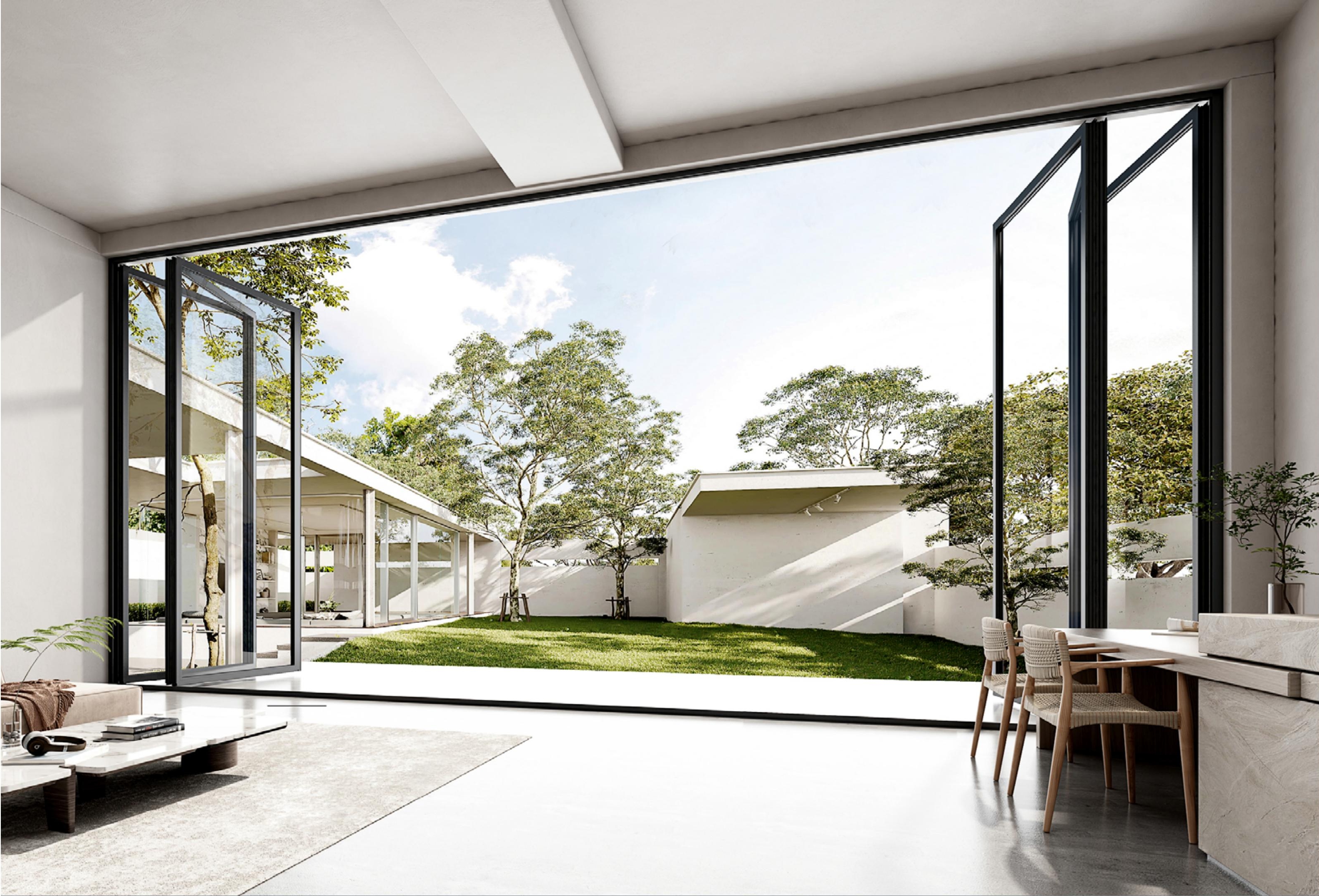
Three Problems Worth Catching Early
Panels drag at the sill. Check sill level, frame square and panel adjustment before assuming the rollers or carriers are defective.
The last panel will not lock. A small alignment error across several panels can accumulate at the locking jamb. Recheck the full frame and panel gaps.
The stack feels tight or unstable. Confirm panel sequence, hinge orientation and carrier locations against the installation drawing.
Final Inspection
- All panels move through the full folding cycle
- Panel gaps are visually consistent
- Traffic door, if included, operates independently as intended
- Locks and handles engage smoothly
- Sill and head tracks are clean
- Drainage openings remain clear
- Perimeter sealing is complete
- Panels stack without hitting walls, columns or furniture zones
FAQ
Are bifold doors difficult to install?They require more alignment than a simple hinged door because several panels, hinges and carriers must work together. Large exterior systems should be installed by an experienced crew.
What causes common bifold door problems?Typical causes include an opening that is not square, insufficient sill or head support, incorrect panel sequence and poor hardware adjustment.
How much does bifold door installation cost?Labor depends on opening size, panel count, access, wall construction and local labor rates. Large glazed systems require more handling than small interior folding doors.
Can bifold doors be installed without a bottom track?Some folding-door designs use different support arrangements, but exterior aluminum systems must follow their engineered frame and hardware design. Do not remove a track specified by the manufacturer.
Send the opening size, panel layout, finished floor detail and project drawings. AMJ can review the configuration before production and installation.