 Foshan AMJ Windows and Doors Co., Ltd.
What Is the Difference Between a Pivot Door and a Hinged Door?
A pivot door rotates around a pivot axis, while a hinged door opens on hinges fixed along one side of the frame. Pivot doors are often chosen for modern architectural entrances, while hinged doors remain a practical option for many residential and commercial buildings.
The better choice depends on the available space, required opening width, weather protection, installation conditions and budget. Here is how the two systems compare.
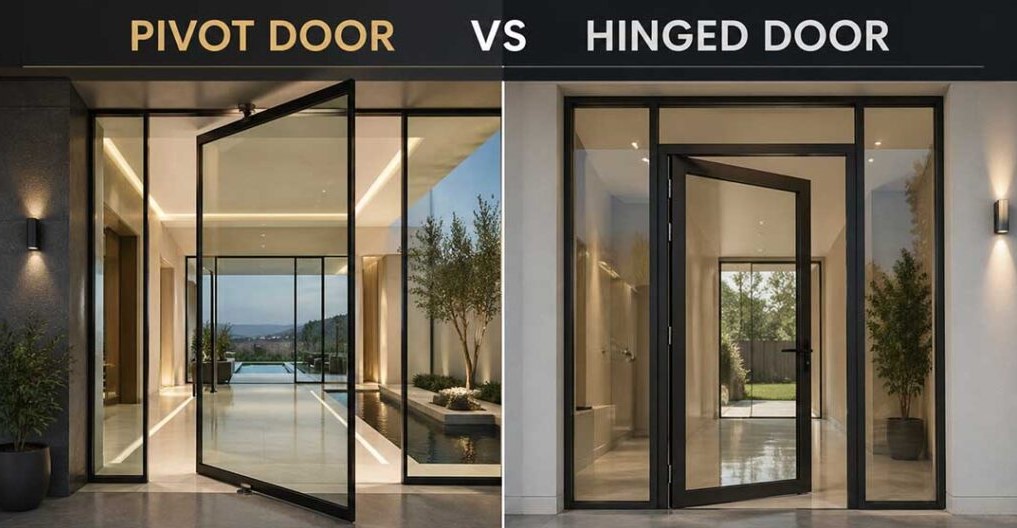
How Does a Pivot Door Differ from a Hinged Door?
The main difference is the position of the rotation point. A pivot door uses pivot hardware, typically positioned at the top and bottom of the door. A hinged door uses hinges attached along the side of the door and frame.
Pivot Doors
The pivot position can be set away from the door's edge, creating a distinctive opening movement. This design is often used for modern entrances where the door itself is an important architectural feature.
The pivot hardware, door panel and supporting structure must be suitable for the selected configuration. The pivot position also affects the usable passage width and the space needed for the door to open.
Hinged Doors
A hinged door rotates around hinges mounted along one side. This familiar arrangement is widely used for residential entrances and other conventional door openings.
Its opening direction and swing area are generally straightforward to plan. The hinges, frame and fixing points must still be selected to suit the actual door and its intended use.
For an overview of available options, see AMJ's aluminum door and window products.
Pivot Door vs Hinged Door: Key Differences
Pivot doors offer a different appearance and opening movement. Hinged doors are often simpler to coordinate with standard openings. Neither system is automatically better in every situation.
| Factor | Pivot Door | Hinged Door |
|---|---|---|
| Opening mechanism | Rotates around a pivot axis. | Rotates around hinges along one side. |
| Appearance | Creates a distinctive, contemporary entrance. | Suits both modern and traditional designs. |
| Clear opening | The pivot position can reduce usable passage width. | Depends on hinge position and opening angle. |
| Space | Requires clearance for the door's rotation. | Requires clearance along its swing path. |
| Installation | Pivot positioning, floor conditions and alignment need coordination. | Hinge positioning, frame alignment and fixing need attention. |
| Weather sealing | Depends on the system, seals, threshold and installation. | Depends on the frame, seals, threshold and installation. |
| Cost | Specialized hardware or custom work may increase costs. | A standard configuration may be more economical. |
Actual performance depends on the complete door system. Check the applicable structural, air-leakage and water-penetration requirements rather than judging a door by its opening style alone.
What Are the Downsides of Pivot Doors?
The main considerations are usable passage width, swing clearance, installation requirements and cost. Weather sealing also needs to be checked for the specific door system.
Reduced Clear Opening
When the pivot is positioned away from the edge, part of the door may extend into the passage when opened. Check the actual clear opening against the project's circulation and accessibility requirements.
Space and Installation
The door must rotate without hitting nearby walls, furniture or other doors. The pivot hardware, floor, frame and fixing structure must also meet the manufacturer's installation requirements.
Weather Sealing
For an exterior entrance, confirm the door's sealing design, threshold and applicable performance test results. Do not assume every pivot door has poor sealing or that every hinged door performs better; the complete system matters.
Higher Project Costs
Some pivot doors require specialized hardware, custom fabrication or additional site preparation. These requirements can increase the total cost compared with a standard hinged door.
Can a Pivot Door Open Both Ways?
Some pivot doors support opening in both directions, but others are designed for one direction only. The permitted movement depends on the selected pivot hardware.
Before ordering, confirm the opening direction, return or closing function, and available clearance. Specify these requirements clearly on the drawings rather than assuming all pivot systems work the same way.
Is a Pivot Door the Same as a Swing Door?
No. A pivot door is one type of swing door. “Swing door” describes the general opening movement, while “pivot door” identifies the mechanism supporting that movement. A conventional hinged door is also a swing door.
Are Pivot Doors More Expensive than Hinged Doors?
Pivot doors can cost more when they require specialized hardware, custom fabrication or additional installation work. The actual price difference depends on the door specification and project scope.
| Cost factor | What to check |
|---|---|
| Door panel | Material, finish, construction and dimensions. |
| Hardware | Pivot mechanism or hinges, locks and handles. |
| Frame and threshold | Frame design, sealing, drainage and floor interface. |
| Site preparation | Required support, fixing points and floor work. |
| Installation | Labor, alignment, adjustment and finishing. |
For a fair comparison, request quotations based on the same dimensions, materials, finish, hardware functions and performance requirements. Confirm whether delivery, installation and site preparation are included.
Where Does Each Door Work Best?
Pivot doors are worth considering when the entrance design benefits from their distinctive movement and the site has enough space. Hinged doors are often practical for conventional entrances and projects that favor a straightforward installation.
| Application | What to consider |
|---|---|
| Modern villa entrance | A pivot door may suit the architectural design if the opening space and system requirements are suitable. |
| Standard residential entrance | A hinged door may provide a straightforward, familiar arrangement. |
| Commercial entrance | Check traffic, accessibility, security and applicable building codes. |
| Exposed exterior entrance | Prioritize tested weather performance, sealing and threshold design. |
| Limited foyer space | Compare the actual swing path and clear passage of both options. |
| Custom architectural project | Confirm the required door design can be supported by the selected hardware and structure. |
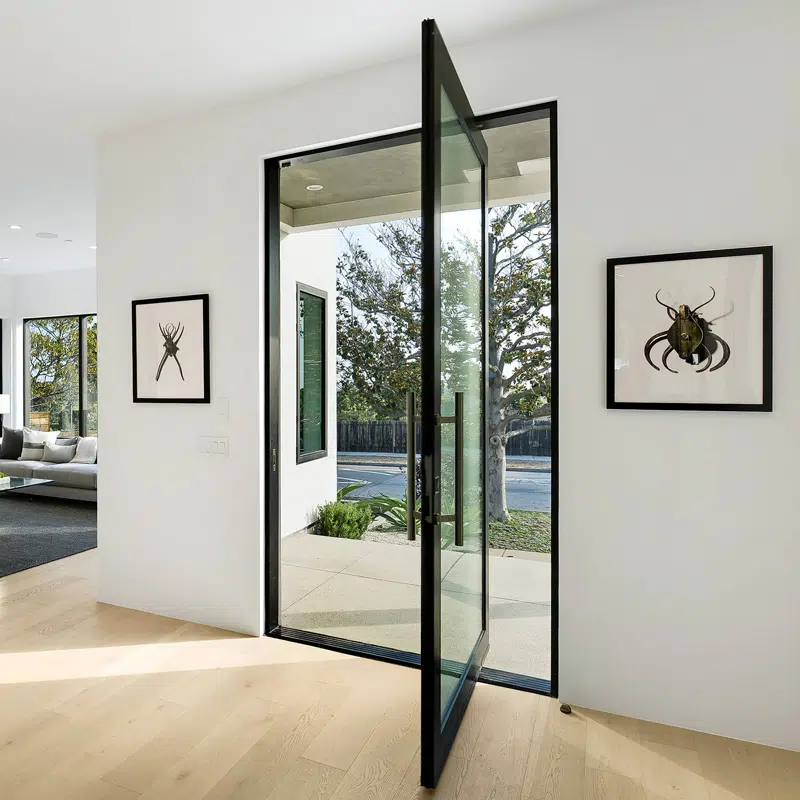
You can view the AMJ project portfolio for examples of residential and commercial applications.
How to Choose the Right Door for Your Project
Start with the opening and site conditions, then select a system that meets the requirements. Before ordering, confirm the following:
- Opening dimensions: Check the structural opening and required finished door size.
- Clear passage: Confirm the usable opening width and opening angle.
- Swing space: Check nearby walls, steps, furniture and circulation routes.
- Installation: Confirm the frame fixing, floor support and hardware requirements.
- Performance: Specify weather sealing, security and applicable code requirements.
- Total cost: Compare the door, hardware, delivery, installation and warranty.
For customized door projects, review the AMJ production process to understand how project requirements are coordinated. Buyers seeking custom manufacturing or private-label supply can also explore AMJ's OEM solutions.
Frequently Asked Questions
What are the potential problems with pivot doors?
Potential issues include reduced clear passage width, insufficient swing clearance, incorrect pivot alignment and unsuitable floor preparation. Sealing must also match the system and site conditions.
What is the point of a pivot door?
A pivot door creates a distinctive opening movement and can complement a modern architectural entrance. It is most suitable when the design benefit justifies the space, hardware and installation requirements.
Are pivot doors worth it?
They may be worth considering when the opening style is an important part of the design. For a conventional entrance, a hinged door may meet the requirements with a simpler specification.
Why are pivot doors so expensive?
Some systems require specialized pivot hardware, custom fabrication and additional installation coordination. The actual cost depends on the materials, dimensions and project requirements.
Can a pivot door open both ways?
Some pivot systems allow two-way opening, while others support a single direction. Confirm the hardware function before ordering.
Is a hinged door better for weather sealing?
Either type can provide suitable weather protection when properly designed and installed. Compare the actual test results, seals, threshold and installation details for the products being considered.
Pivot Door or Hinged Door: Which Should You Choose?
Choose a pivot door when its opening movement and appearance suit the entrance and the site can accommodate the system. Choose a hinged door when a conventional opening arrangement better meets the project's space, performance and budget requirements.
AMJ supplies customized aluminum windows and doors for builders, contractors, developers, dealers and importers. Share your drawings and project requirements with our team to discuss suitable door configurations and quotation options.
Planning a Door Project?
Send AMJ your drawings, opening dimensions and project requirements to discuss customized aluminum door solutions.
Contact Us WhatsApp