 Foshan AMJ Windows and Doors Co., Ltd.
 That distinction matters when builders, contractors and developers compare window schedules. Searching for “tilt in windows” can lead to several different operating styles, but the hardware, screen position, interior clearance and project use are not interchangeable.
This guide explains the practical pros and cons of tilt-and-turn windows and where the system fits best in an aluminum window package.
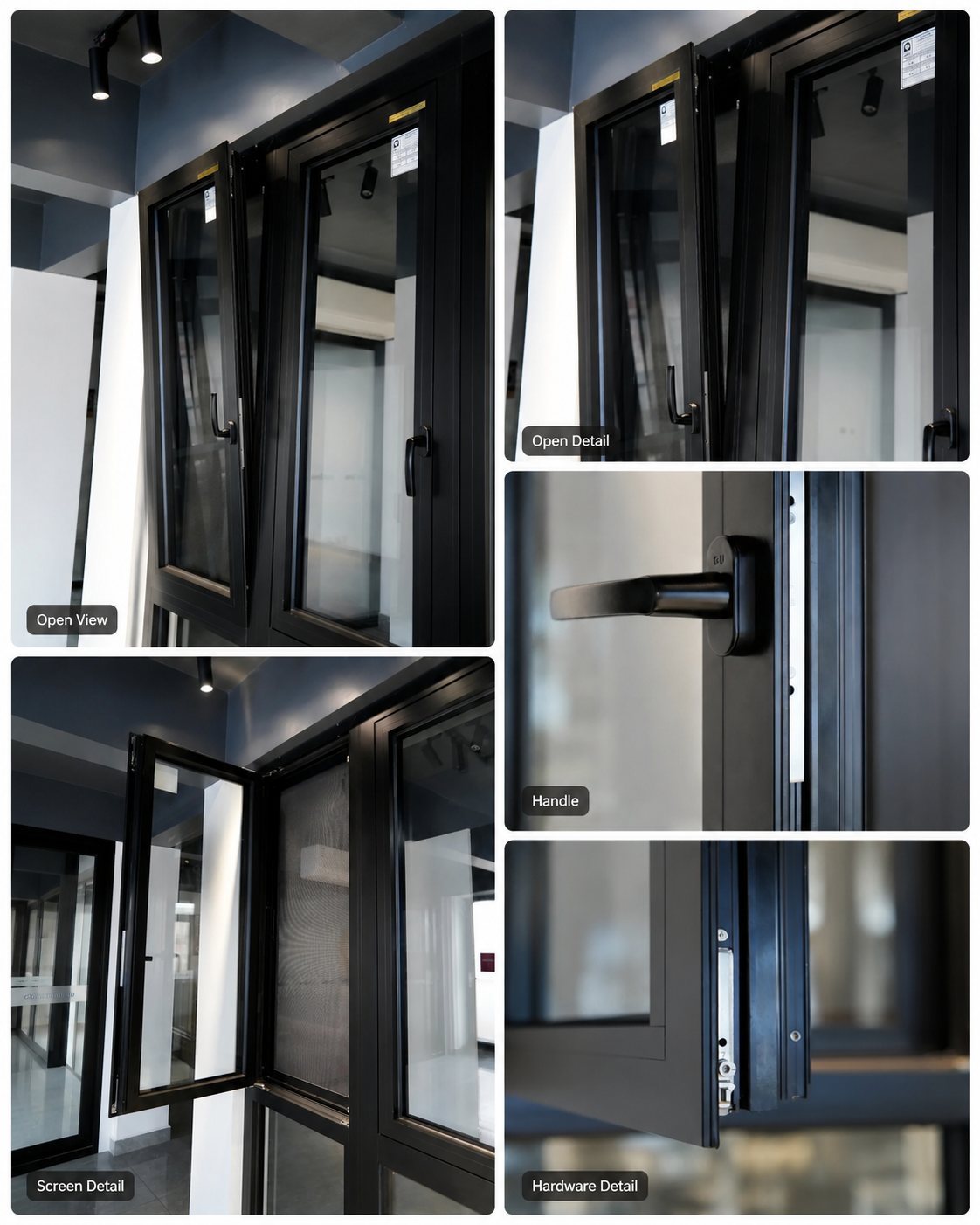
First, Make Sure the Window Type Is Clear
| Term | How It Works | What It Usually Means for a Project |
|---|---|---|
| Tilt-In Sash Window | The sash releases and tilts inward, usually to make the exterior glass easier to clean. | The tilt function is mainly a cleaning feature. Normal ventilation usually comes from the sash sliding up or down. |
| Tilt-and-Turn Window | The sash tilts inward at the top or turns inward from the side, controlled by the handle. | One sash provides controlled ventilation, wider opening and indoor access to the exterior glass. |
| Inward-Opening Casement | The sash swings inward from the side but does not necessarily include a tilt mode. | The window needs interior swing space, but it should not be specified as tilt-and-turn unless both functions are included. |
For quotations and shop drawings, avoid using “tilting window” by itself. State whether the project needs a tilt-in sash, an inward-opening casement or a true tilt-and-turn aluminum window.
Why Builders Choose Tilt-and-Turn Windows
Tilt mode opens the top of the sash inward for everyday airflow. Turn mode opens the sash inward from the side for a wider opening, cleaning and access.
The tilted position is useful where occupants want regular airflow without a sash projecting far into the room. It works well in bedrooms, apartments, townhouses and other occupied spaces where controlled ventilation matters.
When the sash is turned inward, the exterior surface is easier to clean from the room side. This can be helpful on upper floors, subject to the project’s safety and access requirements.
Because the sash opens inward, the insect screen is generally placed toward the exterior side of the frame. Screen type and removability should be confirmed with the selected aluminum window system.
A single operating style can be repeated across bedrooms and living spaces while fixed glass is used where ventilation is not required. This helps keep the window schedule organized without making every opening identical.
The Trade-Offs to Plan for Before Ordering
Turn mode uses room-side space. Counters, furniture, curtains, deep window sills and interior blinds can interfere with the opening path if they are not coordinated early.
Tilt-and-turn operation relies on coordinated hardware around the sash. The project team should confirm the handle side, opening direction, sash size and operating instructions before production.
On many tilt-and-turn windows, the sash should be fully closed before the handle is moved to another position. Operating instructions should be handed over with the completed project.
Glass weight, sash dimensions, hardware capacity and project performance requirements all affect the correct aluminum window system. A general “tilt-and-turn” description is not enough for production.
Fixed windows may be more practical where only daylight is needed. Sliding windows may fit rooms with limited interior swing space. The window type should follow the room layout, ventilation target and installation conditions.
What to Confirm on the Window Schedule
- Rough opening size or actual frame size
- Tilt-and-turn operation rather than tilt-in cleaning only
- Handle side and inward swing direction
- Clearance from counters, furniture, blinds and curtains
- Glass requirements, including Low-E and safety glass where required
- Screen type and screen position
- Frame color, hardware color and finish
- Required U-Factor, SHGC, design pressure or project testing criteria
- Wall section, installation method and interior finish depth
- Approved shop drawings before production release
AMJ supplies aluminum tilt-and-turn window systems for custom residential and commercial projects. The final system, glass and hardware should be selected from the project drawings, window schedule and performance requirements rather than from the opening style alone.
Common Questions
The name depends on the operation. A sash that tips inward mainly for cleaning is often called a tilt-in window. A sash that both tilts and swings inward is called a tilt-and-turn window.
They need interior swing clearance, use more involved hardware than simpler window types and require correct operation. Large or heavy sashes also need careful system selection.
On many systems, the handle is moved only while the sash is fully closed. The handle then selects locked, tilt or turn mode. Always follow the hardware instructions supplied with the window.
They can work well in projects that need controlled ventilation, indoor glass cleaning and a consistent aluminum window system. The interior layout and project specifications should be reviewed first.
Send the rough opening sizes, window schedule, glass requirements, screen choice and project drawings. AMJ can review the opening configuration before preparing a quotation.