 Foshan AMJ Windows and Doors Co., Ltd.
What Are the Pros and Cons of Awning Windows?
Awning windows are top-hinged windows that open outward from the bottom. They offer controlled ventilation and flexible placement, but their outward swing, cleaning access and opening area need careful consideration.
For homeowners, builders and developers, the right choice depends on the room layout, ventilation requirements, local climate and project budget.
What Is an Awning Window?
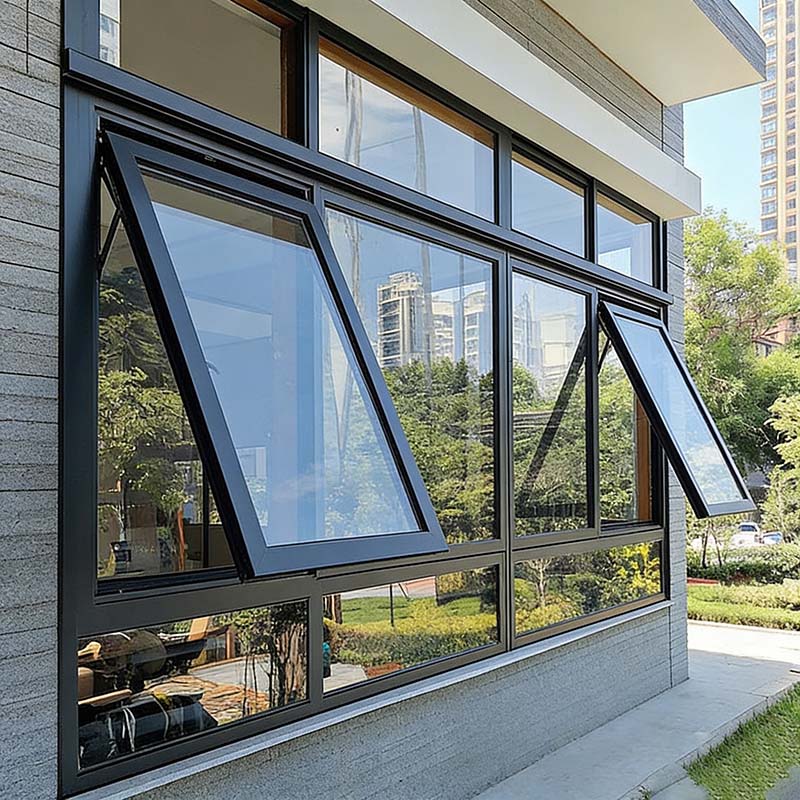
An awning window has hinges along the top of the frame, allowing the bottom of the sash to open outward. Depending on the system, it may use a crank or another operating mechanism.
Unlike a sliding window, it projects outside the building when open. It can be installed alone or combined with fixed glazing and other operating windows. Here, “awning window” refers to the window type, not an exterior shade installed above a window.
What Are the Advantages of Awning Windows?
The main advantages are flexible ventilation, privacy-friendly placement and the potential to reduce direct rain entry during light rain under suitable conditions.
Ventilation in Light Rain
The top-hinged sash can help deflect some falling rain away from the opening, allowing ventilation in suitable weather. It does not guarantee protection from wind-driven rain or severe storms.
Privacy and Flexible Placement
Awning windows can be installed higher on a wall to provide daylight and ventilation while limiting direct views into the room. This can be useful in bathrooms, kitchens and other privacy-sensitive spaces.
High-Level Openings
Awning windows can be combined with fixed glazing or installed above other windows to provide ventilation without using interior floor space. For high-level installations, plan for safe operation and exterior cleaning access.
What Are the Downsides of Awning Windows?
The main drawbacks are exterior clearance, potentially difficult cleaning, limits on the usable opening and the need to maintain the operating hardware.
Outward Opening Requires Clearance
The sash projects outside when open, so it must not interfere with balconies, walkways, stairs or nearby structures. This is particularly important in multi-family buildings and shared spaces.
Cleaning and Maintenance
Exterior glass can be difficult to reach on upper floors. Hinges, handles, fasteners and seals also need periodic inspection, depending on the system and conditions of use.
Ventilation May Be Limited
The available airflow depends on the sash dimensions, opening angle and room ventilation path. If the project needs a larger clear opening, compare awning windows with casement or sliding alternatives.
Weather Performance Must Be Verified
The opening style alone does not establish air or water resistance. For exposed locations, check the actual product's test information, frame, seals, drainage and installation details.
Awning vs Casement vs Sliding Windows: Which Is Better?
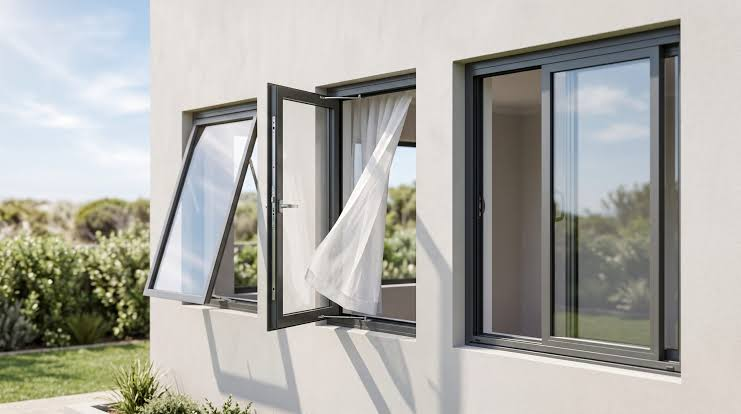
Awning windows suit top-hinged ventilation, casement windows offer side-hinged outward opening, and sliding windows avoid an outward swing. The best option depends on the opening location and project requirements.
| Factor | Awning Windows | Casement Windows | Sliding Windows |
|---|---|---|---|
| Opening method | Top-hinged, bottom opens outward. | Side-hinged, opens outward. | Moves horizontally along tracks. |
| Exterior clearance | Required for the projecting sash. | Required along the swing path. | No outward swing required. |
| Typical applications | High-level openings, kitchens and bathrooms. | Rooms where side-opening ventilation suits the layout. | Wide openings and areas where outward swing is impractical. |
| Key consideration | Opening area and cleaning access. | Swing direction and clearance. | Usable opening area and track configuration. |
Awning vs Casement Windows
Choose an awning window when a top-hinged opening suits the wall layout or the window needs to sit above fixed glazing. A casement window may be more suitable when a side-hinged opening better meets the ventilation and design requirements.
Both styles open outward. Compare their actual dimensions, hardware, glass and performance specifications rather than assuming one style is always more energy-efficient.
See AMJ's aluminum casement window for a product example.
Awning vs Sliding Windows
Sliding windows are worth considering when an outward-opening sash could obstruct a balcony or walkway. Awning windows may be preferable when a top-hinged opening better suits the room and ventilation requirements.
For more detail, read our guide to casement vs sliding windows, or review AMJ's three-track aluminum sliding window.
Where Do Awning Windows Work Best?
Awning windows are useful where controlled ventilation and flexible placement matter, provided the sash can open safely and the room receives adequate airflow.
Kitchens and Bathrooms
These rooms often need ventilation and privacy. Check the window's position, cleaning access and relationship to cooking equipment or bathroom fixtures. A window does not replace any mechanical ventilation required by local codes.
High-Level and Privacy-Sensitive Areas
A high-level awning window can provide daylight and ventilation while reducing direct sightlines. Confirm that the operating mechanism can be reached safely and that the window meets any applicable opening or emergency-escape requirements.
Residential and Multi-Family Projects
Awning windows can be combined with fixed glazing or other operating windows to meet different daylight and ventilation needs. Builders should coordinate the window schedule, rough openings, glass requirements, screens and installation details.
See the AMJ project portfolio for examples of residential and commercial applications. For bedroom openings, also review our bedroom window size and egress guide.
How Much Do Awning Windows Cost?
The price depends on dimensions, frame material, glass, hardware, quantity and installation conditions. As a U.S. residential replacement reference, Modernize's awning window cost guide has published installed estimates of roughly $477–$1,107 per window. This is an indicative retail estimate, not an AMJ factory quotation.
Factors That Affect the Price
- Frame: Material, profile system, finish and dimensions.
- Glass: Double or triple glazing, Low-E coating and safety-glass requirements.
- Hardware: Opening mechanism, locks, handles and screen options.
- Installation: New construction or replacement, site access and finishing work.
- Order quantity: Single-window replacement pricing differs from project-based factory supply.
How to Compare Quotes
Compare quotations using the same dimensions, glass package, finish, hardware, screens and performance requirements. Confirm whether shipping, installation, removal, taxes and warranty coverage are included.
For factory quotations, provide the window schedule, quantities, project location and required specifications. This helps suppliers quote against the same scope.
What Should You Check Before Ordering Aluminum Awning Windows?
Confirm the frame, glass, hardware, opening clearance and installation requirements before approving the drawings. These details determine whether the selected configuration suits the project.
Frame and Thermal Break
AMJ's high-insulation aluminum awning window uses a 78.3 mm system depth, a 35.3 mm thermal break and a 1.8 mm aluminum profile. These figures apply to this specific product system, not to all awning windows.
Glass and Energy Performance
The referenced AMJ system lists standard double glazing of 5 mm Low-E glass + 20 mm argon + 5 mm tempered clear glass, with compatible insulated-glass configurations up to 47 mm. Confirm the final glass package and applicable performance documentation for the actual order.
For North American projects, the National Fenestration Rating Council (NFRC) explains window performance ratings, while ENERGY STAR's window criteria help buyers check relevant efficiency requirements. Certification must be confirmed for the specific product configuration.
Hardware, Screens and Installation
The referenced AMJ system lists German G-U hardware as standard, HK Kinlong as an option, an optional pleated retractable screen, and nail-fin or mounting-tab installation options.
Confirm the required opening direction, screen, fixing method, drainage and sealing details against the project drawings. AMJ can review these requirements through its project consultation and production process.
Frequently Asked Questions
Are Awning Windows Worth It?
They are worth considering when top-hinged ventilation and flexible placement suit the room. They may be less suitable where exterior clearance, cleaning access or a larger opening is a priority.
What Are the Downsides of Awning Windows?
The main downsides are the outward swing, cleaning access, hardware maintenance and the need to confirm the usable opening area.
Are Awning Windows Suitable for Rainy Climates?
They can help limit direct rain entry during light rain in suitable conditions. For exposed locations, verify the actual water-resistance performance and installation details rather than relying on the window style alone.
What Are Some Alternatives to Awning Windows?
Casement windows provide side-hinged outward opening, while sliding windows avoid an outward swing. Fixed windows are another option where daylight is needed but ventilation is not.
Are Awning Windows Right for Your Project?
Choose awning windows when their top-hinged opening, placement and ventilation suit the room. If exterior clearance, cleaning access or a larger usable opening is more important, compare casement and sliding alternatives before finalizing the window schedule.
AMJ supplies customized aluminum windows and doors for builders, contractors, developers, dealers and importers. Send your drawings or window schedule to discuss the appropriate configuration and request a project quotation.
Planning an Aluminum Window Project?
Share your drawings, window schedule or project specifications with AMJ for a product and quotation review.
Contact Us WhatsApp