 Foshan AMJ Windows and Doors Co., Ltd.
Awning vs Sliding Windows: Which Is Better for Your Home?
Awning windows are often a better choice for high-level ventilation and areas where you want to open a window without reaching across a counter. Sliding windows are usually more practical for wide openings and locations where an outward-opening sash would get in the way.
Both styles are used in residential and multifamily construction, but they solve different problems. Before choosing between awning vs sliding windows, consider the opening dimensions, ventilation requirements, exterior clearance, cleaning access, and the performance required for your project.
This guide compares the two styles to help homeowners, builders, contractors, and developers make a practical decision. The same principles apply whether you are considering aluminum windows or comparing other frame materials.
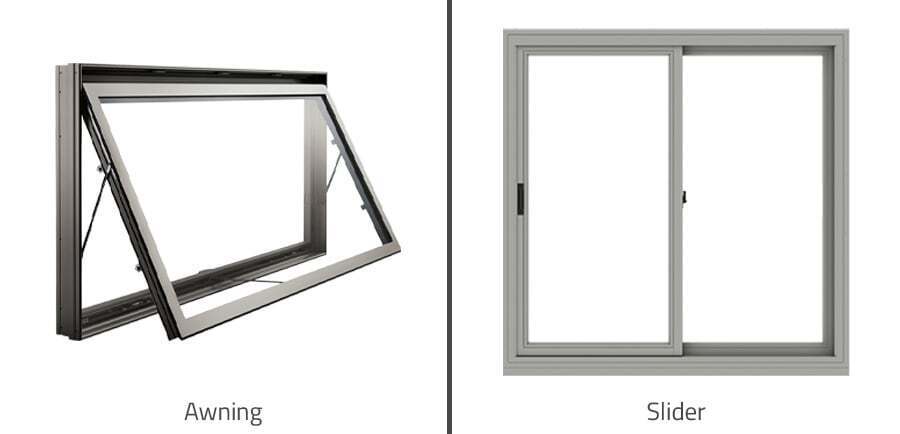
What Is the Difference Between Awning and Sliding Windows?
The main difference is how the window opens. An awning window is hinged at the top and opens outward from the bottom, while a sliding window moves horizontally along its track.
How Awning Windows Work
An awning window opens from the bottom while the top edge remains hinged to the frame. Its outward-opening sash creates a gap for ventilation while the upper part of the window remains attached to the frame.
This design is useful for windows installed above kitchen counters, in bathrooms, or high on a wall. The operating hardware should be selected for the specific window system and intended use; not every awning window uses the same handle or opening mechanism.
Awning windows are available in different frame materials. For projects specifying aluminum, you can explore AMJ's aluminum awning windows to review product configurations and available options.
How Sliding Windows Work
A sliding window opens by moving one sash sideways along a track. Depending on the design, another sash or panel remains fixed while the movable sash slides across it.
This horizontal movement makes sliding windows suitable for wide openings and locations where a sash should not project outward. The actual opening area depends on the number of movable panels and the window configuration.
For residential projects requiring aluminum frames, AMJ's aluminum sliding windows provide configurations that can be reviewed against the opening dimensions and project requirements.
Awning vs Sliding Windows: Key Differences
Awning windows are generally more suitable when the priority is high-level ventilation and outward-opening operation. Sliding windows are generally more suitable when horizontal movement, wide openings, and limited exterior clearance matter most.
| Comparison | Awning Windows | Sliding Windows |
|---|---|---|
| Opening Method | Top-hinged; opens outward from the bottom | Sash moves horizontally along a track |
| Opening Space | Requires clearance outside the window | Does not require an outward swing |
| Common Applications | Bathrooms, kitchens, high-level openings | Living rooms, wide openings, areas near walkways |
| Ventilation | Useful for high-level ventilation; actual airflow depends on the opening | Useful for horizontal ventilation; actual airflow depends on the movable area |
| Rain Exposure | The open sash may help deflect some rain, depending on weather and design | Rain protection depends on track drainage, seals, installation, and weather conditions |
| Cleaning | Exterior glass may be difficult to reach from inside | Tracks need regular cleaning; exterior access depends on the design |
| Maintenance | Hinges, operating hardware, and seals need inspection | Tracks, rollers, locks, and seals need inspection |
| Energy Performance | Depends on the complete window system, glass, seals, and installation | Depends on the complete window system, glass, seals, and installation |
| Cost | Depends on dimensions, hardware, glass, and customization | Depends on dimensions, track configuration, glass, and customization |
These are general differences, not guarantees of product performance. Two windows of the same style can perform differently because of their frame construction, glazing, hardware, weather seals, and installation quality.
When Are Awning Windows the Better Choice?
Awning windows are often the better choice for high-level openings, kitchens, and bathrooms where convenient ventilation is important. Their top-hinged design can be useful when a window is installed above a work surface or in a position that is difficult to reach.
Kitchens and Windows Above Counters
An awning window can be practical above a kitchen counter because the operating hardware can be positioned for access from inside. The sash opens outward, leaving the interior area in front of the window clear.
Before specifying this style, check the counter height, handle position, opening direction, and the clearance available outside. These details matter more than the window style alone.
Bathrooms and High-Level Openings
Awning windows can suit bathrooms where ventilation and privacy are both important. They can be positioned higher on a wall, depending on the building layout, while allowing the sash to open for airflow.
Glass selection and window placement should still be considered separately. An awning window does not automatically provide privacy, and ventilation requirements vary by room and local code.
Ventilation During Light Rain
The outward-opening sash can help deflect some rain away from an open awning window. However, it does not make the opening completely weatherproof.
Wind direction, rainfall intensity, sash position, window design, and installation all affect the result. If the room must remain protected during severe weather, do not rely on the awning shape alone.
When Awning Windows May Not Be Suitable
Awning windows may be unsuitable where the open sash would obstruct a walkway, conflict with nearby structures, or be difficult to clean safely.
They may also be a poor fit when the project requires a particularly wide, unobstructed opening. In those cases, a sliding window or a combination of fixed and operable windows may be more practical.
When Are Sliding Windows the Better Choice?
Sliding windows are often the better choice for wide horizontal openings and locations where an outward-opening sash would interfere with people or nearby objects. Their horizontal operation also works well for many modern residential layouts.
Wide Openings and Larger Views
Sliding windows can be arranged across wide openings using multiple panels. This makes them useful in living rooms and other spaces where a horizontal window layout suits the architecture.
However, a wide frame does not mean the entire window can open. In many common configurations, one panel slides in front of another, leaving part of the frame closed. Confirm the actual operable area when ventilation is important.
Balconies, Walkways, and Limited Exterior Space
Sliding windows are practical near balconies, walkways, and other areas where an outward-opening sash could obstruct movement. Because the sash travels within the frame, no additional exterior swing space is required.
This can simplify window placement in compact residential layouts. Builders should still check the access needed for cleaning, maintenance, and screen removal where applicable.
Simple Daily Operation
Sliding windows are operated by moving the sash sideways, which may be more convenient for some users than operating an outward-opening window. Actual operating effort depends on sash weight, roller quality, track condition, and installation alignment.
Tracks can collect dust and debris over time. Regular cleaning helps prevent dirt from interfering with movement, while rollers, locks, and seals should be checked as part of routine maintenance.
When Sliding Windows May Not Be Suitable
Sliding windows may not be the best fit when the project needs a particular high-level opening arrangement or when the required airflow cannot be achieved through the available sliding area.
They also need an appropriate track and drainage design. If a room has specific air-leakage, water-resistance, or acoustic requirements, ask for performance information for the exact window configuration rather than assuming that every sliding window performs the same way.
Energy Efficiency, Ventilation, and Maintenance
Neither awning nor sliding windows are automatically more energy efficient. The right comparison is between the performance of the actual window systems, including their frames, glass, seals, and installation.
How to Compare Energy Performance
For projects in North America, compare the applicable whole-window U-Factor, Solar Heat Gain Coefficient (SHGC), air leakage results, and other required performance ratings. Make sure the figures apply to the quoted product and glass configuration.
Frame material also matters. Thermal-break aluminum systems are designed to reduce heat transfer through the frame, but the final result depends on the complete assembly and its tested performance.
Our U-Factor, SHGC, and Design Pressure guide explains how builders can review these ratings before comparing window quotations.
How to Compare Ventilation
Compare the actual clear opening rather than the overall frame dimensions. An awning window may be useful for a high-level opening, while a sliding window may offer a more suitable layout for a wide opening.
The best choice depends on the room, window size, sash configuration, and required airflow. Where a room has a specific ventilation requirement, confirm the applicable code and the performance of the selected system.
Cleaning and Long-Term Maintenance
Both window styles need regular maintenance, but the areas requiring attention are different. Awning windows need inspection of their hinges, operating hardware, locking points, and weather seals. Sliding windows need clean tracks and properly functioning rollers, locks, and seals.
Cleaning access should be considered before ordering, particularly for upper-floor windows. Not every window has a sash that tilts inward or can be removed for cleaning, so confirm the actual product design rather than assuming this feature is available.
Which Window Is Best for Different Rooms?
Awning windows are often suitable for high-level ventilation, while sliding windows are often better for wide openings and locations with limited exterior clearance. The best option still depends on the room layout, window dimensions, and any applicable safety requirements.
| Application | Possible Choice | What to Check |
|---|---|---|
| Kitchen above a counter | Awning | Handle access, opening clearance, and ventilation |
| Bathroom | Awning or Sliding | Privacy, ventilation, and cleaning access |
| Living room with a wide opening | Sliding | Operable area, view, and panel layout |
| High-level wall opening | Awning | Operating hardware, reach, and maintenance access |
| Near a balcony or walkway | Sliding | Exterior clearance and safe access |
| Bedroom | Either, subject to requirements | Ventilation, cleaning, and emergency escape requirements where applicable |
| Townhouse development | Both, depending on room | Elevation design, window schedule, and project specifications |
| Multifamily project | Both, depending on room | Repeated sizes, maintenance access, performance, and local codes |
Bedrooms require particular attention if a window is intended to serve as an emergency escape and rescue opening. The required clear opening depends on the adopted local code and the selected window configuration, not just the nominal frame size.
See our bedroom window size and egress guide for more information about clear openings and the details builders should confirm before ordering.
How Much Do Awning and Sliding Windows Cost?
There is no universal price difference between awning and sliding windows. The final cost depends on the dimensions, frame material, glass configuration, operating hardware, customization, order quantity, and installation scope.
Awning windows use a hinged opening system, while sliding windows use a track and moving sash. Their hardware and manufacturing requirements differ, but these differences alone are not enough to establish which option will cost less for every project.
| Cost Factor | Questions to Ask Before Comparing Quotes |
|---|---|
| Frame and Finish | Are the frame material, finish, and overall dimensions the same? |
| Glass | Are the glass type, thickness, and required performance ratings comparable? |
| Hardware | Does the quotation include the required hinges, operating hardware, rollers, locks, and screens? |
| Customization | Are both windows being quoted to the same drawings and opening requirements? |
| Order Quantity | Are you comparing a single replacement window or a project order with multiple units? |
| Installation | Does the price include removal, installation, finishing, delivery, and any required site work? |
For a fair comparison, request quotations using the same opening dimensions, glass requirements, finish, and delivery scope. For new construction or multifamily projects, confirming these details before production can help reduce changes and avoid comparing products that do not meet the same requirements.
How Should Builders Choose Between Awning and Sliding Windows?
Builders should choose the window style that meets the room's requirements and the project's performance specifications. The most reliable approach is to review the drawings and window schedule before requesting a quotation.
1. Confirm the Opening Dimensions
Start with the architectural drawings and verify the intended window size and opening proportions. Awning windows need sufficient exterior clearance, while sliding windows need a layout that accommodates the moving sash and track.
2. Define Performance Requirements
Confirm the required energy, air, water, structural, and glass-safety performance for the project location. Do not select a window solely because its opening style is commonly associated with a particular benefit.
3. Check Hardware and Maintenance Access
Review how the window will be operated, where the hardware will sit, and whether the window can be cleaned and maintained safely. These details are especially important for high-level windows and repeated openings in multifamily buildings.
4. Prepare the Window Schedule Before Ordering
A clear window schedule helps the manufacturer confirm the window marks, quantities, dimensions, opening types, glass requirements, and other specifications before production.
If you are preparing a project order, read our window schedule guide before sending the final requirements to your supplier.
For projects with repeated window configurations, a consistent specification also helps coordinate product selection, shop drawings, manufacturing, and installation. You can review examples on the AMJ project page to understand how window and door solutions are used in residential projects.
FAQ: Awning vs Sliding Windows
Which is better, sliding or awning windows?
Awning windows are often better for high-level ventilation and locations above counters. Sliding windows are often better for wide openings and areas where an outward-opening sash would obstruct movement. The final choice depends on the room, opening dimensions, performance requirements, and maintenance access.
What are the downsides of awning windows?
The main limitations are the exterior space needed for the open sash, potentially difficult exterior cleaning, and the restrictions that may apply to wide openings. Their suitability also depends on the opening hardware, window dimensions, and installation location.
What are the drawbacks of sliding windows?
Sliding windows usually provide only a partial opening, and their tracks can collect dirt and debris. Rollers and seals also require inspection over time. Actual ventilation and weather performance depend on the design and installation.
Are awning windows good for rainy weather?
An open awning sash can help deflect some rain, but it does not guarantee that water will stay out. Wind direction, rainfall intensity, sash position, drainage, and the window system all affect weather protection.
Are awning windows more energy efficient than sliding windows?
Not in every case. Awning windows may use a closing arrangement that presses the sash against the seals, but actual energy performance depends on the complete frame, glass, weather seals, and installation. Compare applicable whole-window test results rather than relying on the window style alone.
Which window is easier to maintain?
Neither style is maintenance-free. Awning windows need checks of hinges, operating hardware, and seals. Sliding windows need clean tracks and properly functioning rollers and locks. Cleaning access should be confirmed for the specific product and installation location.
Final Recommendation: Awning or Sliding Windows?
Choose awning windows when high-level ventilation and outward-opening operation suit the room. Choose sliding windows when a wide opening and no outward swing are more important.
For a whole-house or multifamily project, there is no need to use only one window style. Awning windows can work well in selected kitchens, bathrooms, and high-level openings, while sliding windows can suit wide living-room openings and areas with limited exterior clearance.
Before ordering, compare the actual opening dimensions, glass configuration, performance requirements, hardware, maintenance access, and total project cost. These details provide a more reliable basis for choosing than a general claim that one style is always better.
Planning an Aluminum Window Project?
AMJ supplies customized aluminum windows and doors for builders, contractors, developers, dealers, and importers. Share your drawings, BOQ, or window schedule to discuss suitable window configurations and request a project quotation.